Category: Black & White

  • Gray sentinel in a kingdom of frost

    Gray sentinel in a kingdom of frost

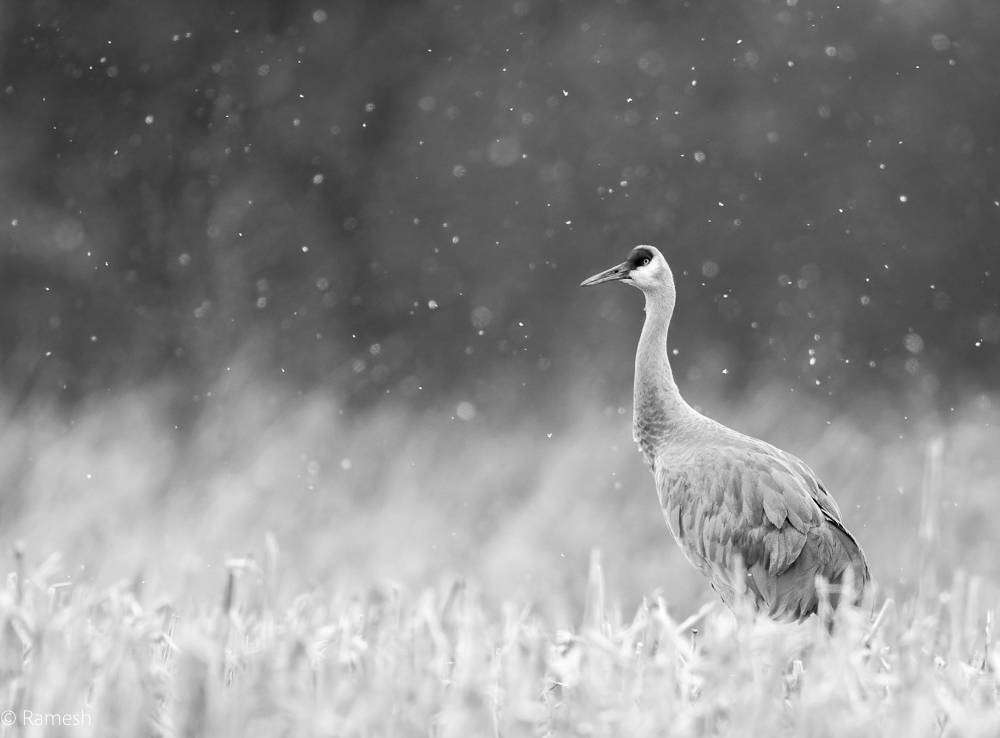
    The world was hushed, muffled under a heavy shroud of white. Above the crystalline silence, a single sandhill crane stood motionless a gray sentinel in a kingdom of frost. Its gaze was not one of survival or fear, but a deep, rhythmic peace that seemed to anchor the drifting snow. To look into that amber eye was to feel the frantic clock of the world slow to a crawl, replaced by the steady, ancient pulse of the earth.

    I felt the winter then, not as a scene, but as a sharp, physical truth. The breeze was a jagged blade, scouring my bare skin until my fingers throbbed with a dull, aching heat. It would have been easy to recoil, to curse the bitterness of the air and the cruelty of the ice. Yet, how could I offer anger to a moment so holy?

    To feel the sting is to know I am alive. The cold was the price of admission to this sanctuary of silver and salt. Should I resent the wind that bites, or thank the nature that invites me to witness such raw, unvarnished grace? I choose the latter. I choose to let my skin burn if it means my soul can watch the crane. This is not a hardship to be endured, but a jagged, beautiful gift to be held with trembling, grateful hands.
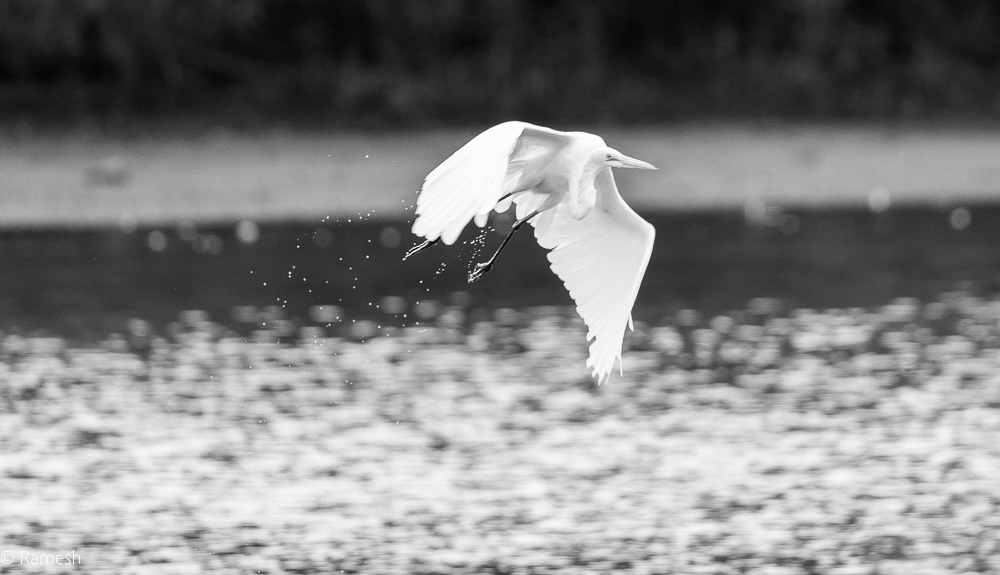
  • Beauty of the spray

    Beauty of the spray

    Nature does not perform for an audience; it simply is. For most, this moment would be a white flash in the corner of an eye, forgotten by the next breath. But through the lens, the photographer becomes a guardian of the ephemeral.

    This image is a gift to those who weren’t there. It invites the viewer to slow down and savor the tension in the egret’s legs as they tuck away, and the weightless beauty of the spray it leaves behind. It is a reminder that even in a “silent drive” or a quiet morning at the marsh, there is a fierce and bold struggle for life taking place. You didn’t just take a photo; you saved a moment from disappearing into the wind.

  • Fierce, bold, and entirely free

    Fierce, bold, and entirely free

    The silent gray of dawn hung low over the corn husks of Killdeer Plains as I moved through the landscape. The engine was a distant hum, the only intrusion in a world that hadn’t yet fully woken. Then, I saw them: two silhouettes, stark and ancient, grounded in the rough stubble of the winter field.

    One took flight, a heavy beating of wings that seemed to push the very air aside. The other remained, its piercing gaze locked onto mine. There was no fear in those eyes, only a fierce, gold-rimmed defiance. I felt like a trespasser in a kingdom where I had no rank. Perhaps it was cursing the mechanical disruption of its morning vigil, or perhaps it was simply reminding me whose land I was truly standing on.

    As it finally pushed off, the transition from stillness to power was absolute. In one fluid motion, the bird transformed from a guardian of the soil into a master of the sky. To witness that takeoff the sheer, muscular elegance and the unwavering posture of a predator was to understand why this creature has fascinated humanity for centuries. It was a lesson in presence; even in a moment of disturbance, the eagle surrendered nothing of its majesty. It remained fierce, bold, and entirely free.


  • Stillness of the unknown

    Stillness of the unknown

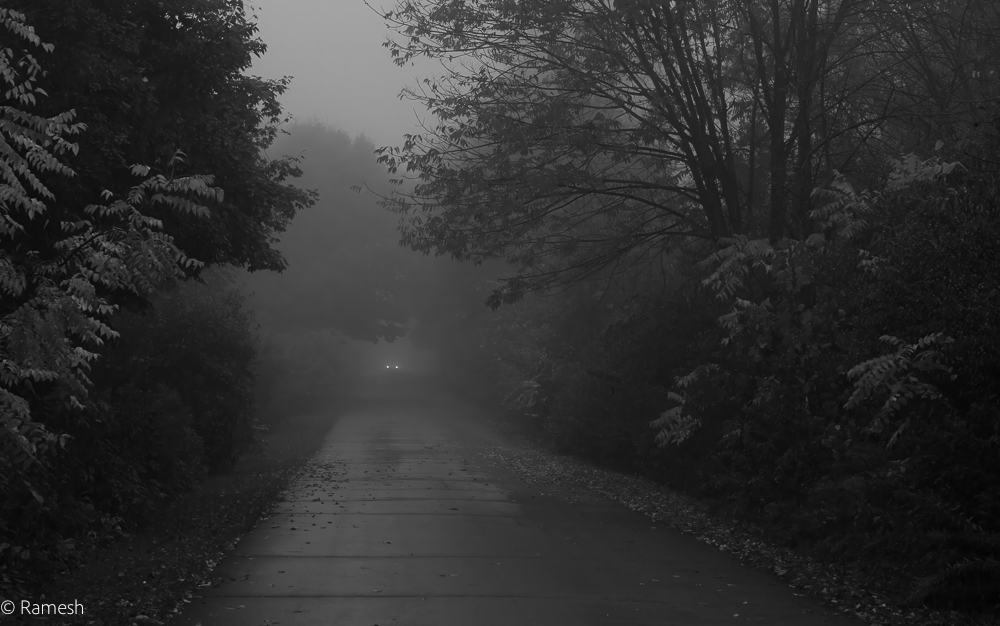
    The soft veil of the fog transforms a familiar road into a quiet, meditative space where the world feels small and intimate. There is a profound sense of peace in the way the dense mist softens the edges of the trees, turning the path ahead into a gentle mystery. Instead of feeling lost, the atmosphere feels like a permission to slow down and breathe, finding comfort in the stillness of the unknown.

    That distant pair of lights on the horizon serves as a subtle, refreshing reminder that we are never truly alone in the dark. It isn’t an overwhelming glare, but a steady, hopeful presence that guides the eye forward through the haze. It captures that exact moment when uncertainty stops being a source of anxiety and becomes a beautiful, shared journey toward whatever lies just beyond the reach of our sight.

  • Hunters

    Hunters

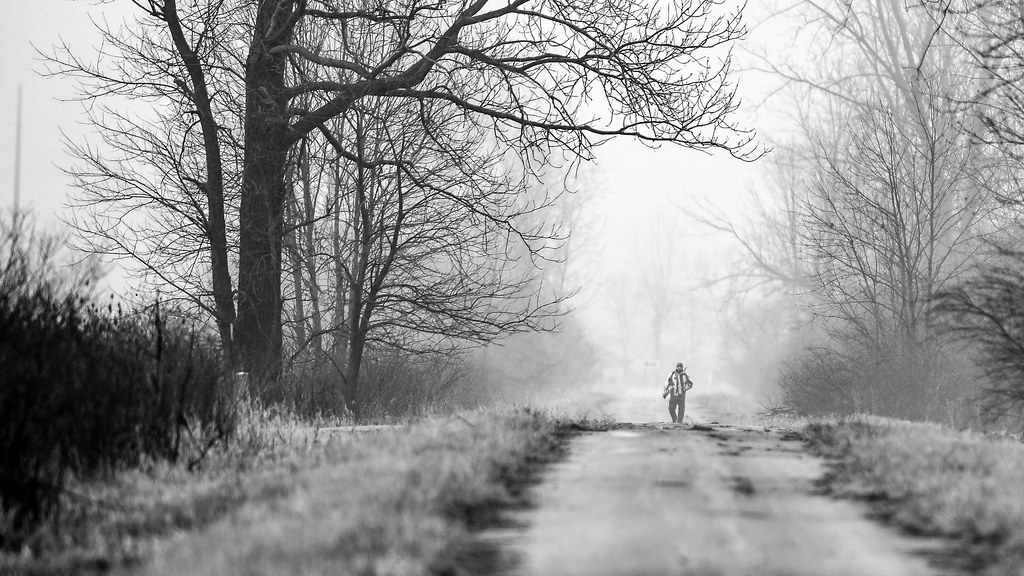
    The dawn breaks in a soft, silvered hush, where the fog swallows the horizon and transforms the sunrise into a ghost of gold. There is a quiet joy in this—a world blurred at the edges, waiting to be born.

    But as the light strengthens, the stillness is broken by the silhouette of the hunt. To see the birds the very heartbeat of the morning marked for the fall brings a sharp, cold sorrow. One cannot help but mourn the sudden silence where there was once song.

    Yet, to look deeper is to see the ancient, jagged duality of life. For the hunter, the morning is not about malice, but a primal connection to the land—a pursuit of sustenance and a rugged kind of reverence for the chase.

    Every scene is a coin with two faces: the fragile beauty of the living and the heavy reality of the harvest. To witness both is to see the world as it truly is a masterpiece of light and shadow, where joy and sorrow are woven into the same gray mist.

  • Between Worlds: The Specter of the Panamints

    Between Worlds: The Specter of the Panamints

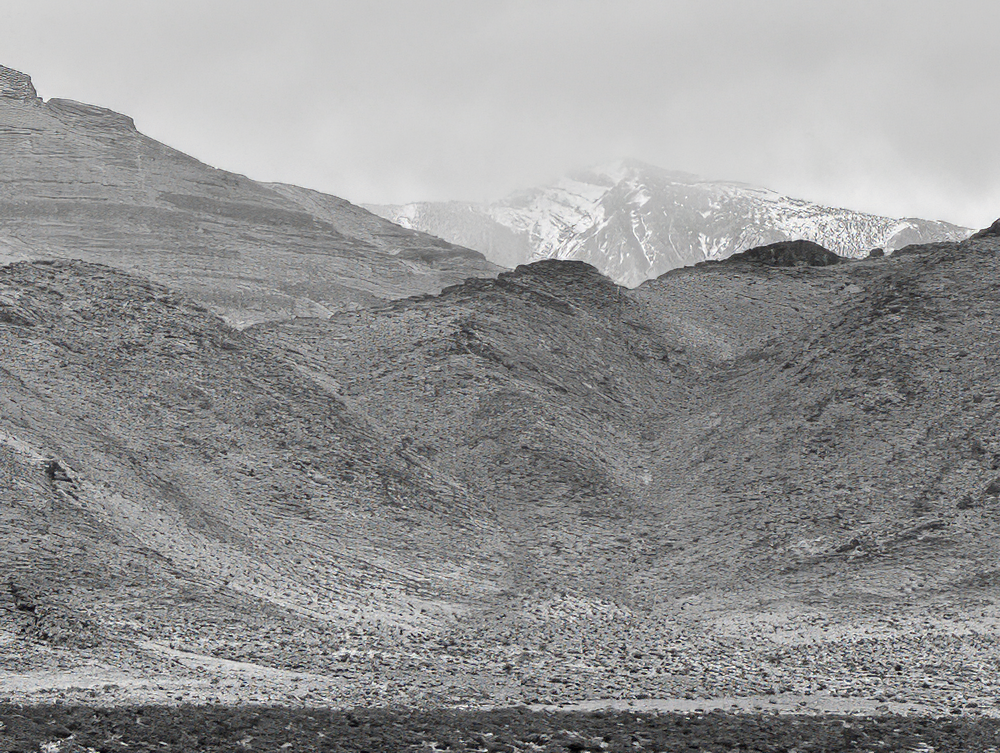
    The road home from Death Valley is a passage between worlds. Leaving the salt-crusted basin of the valley floor, the earth begins to fold in ancient, rhythmic waves—a landscape forged of shadow and stone. The road climbs through a labyrinth of weathered rock where the hills overlap like the scales of a sleeping giant, their slopes etched with the deep, geometric scars of eons of erosion.

    Then, emerging from a gray veil of clouds, a sudden ghost appears in the distance: Telescope Peak.

    It feels like a mirage—a jagged, crystalline phantom rising out of the desert heat. It seems to rise not from the earth itself, but from the mist, its crown silvered with fresh snow. This peak is a silent exhale against the valley’s warmth, a brushstroke of white that feels less like solid rock and more like a watercolor dream suspended between the clouds and the canyon.

    The snow is not merely a color; it is a texture that softens the mountain’s harsh edges, transforming a wall of stone into a soft, glowing vision. In this space, the silence of the desert amplifies, caught between the heavy, grounded weight of the foothills and the light, soaring majesty of the summit. It serves as a striking reminder that in this landscape, winter and summer are separated by only a few thousand vertical feet.